
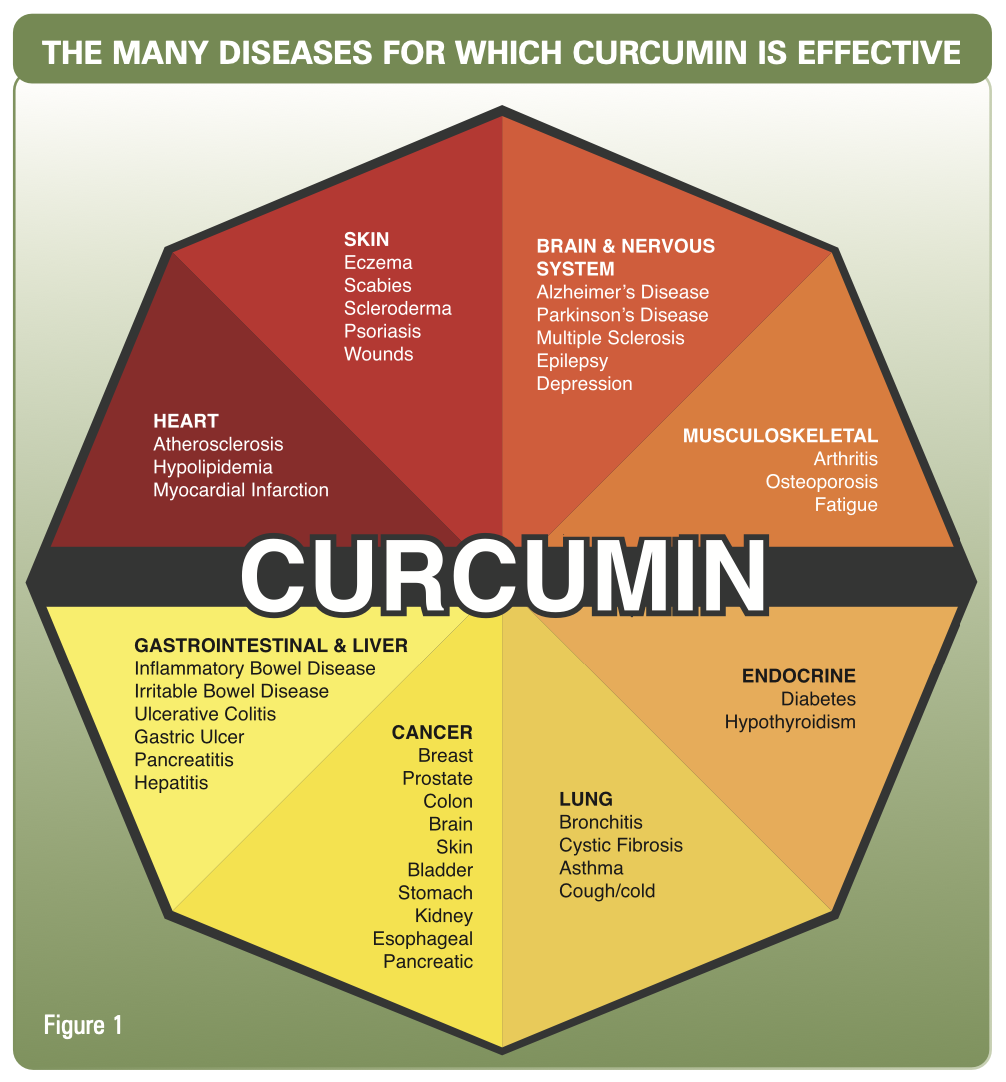
“Curcumin is not only a good preventative for various diseases, including a variety of human cancers, but a growing body of data indicates that it may even be helpful in conjunction with conventional chemotherapy for enhanced clinical outcomes. In addition to cancer, curcumin has been shown to be potentially effective in a wide variety of diseases, including rheumatoid and osteoarthritis, Alzheimer’s disease, inflammatory bowel diseases, depression and liver problems, just to name a few thus far studied.” Ajay Goel, PhD, Professor and Chair, Department of Translational Genomics and Oncology at the Beckman Research Institute City of Hope Comprehensive Cancer Center, as well as Director of Biotech Innovations at the City of Hope Medical Center, in Duarte, California
Why is Curcumin Good for So Many Problems?
One of the reasons that curcumin works so well on such a wide range of diseases is because it is such a powerful anti-inflammatory. We know that almost all chronic diseases—from diabetes to heart disease to cancer to arthritis to Alzheimer’s disease— have something in common: unchecked, destructive inflammation. Unlike synthetic drugs, which typically work against only a single inflammation pathway, natural curcumin reduces inflammation through its effects on multiple inflammation targets. Curcumin simultaneously works at multiple levels of multiple pathways. In technical terms, curcumin has been found to:- Suppress the activation of the NF-kB, which regulates the expression of pro-inflammatory gene products
- Downregulate COX-2, the enzyme linked to most inflammation
- Inhibit 5-LOX, another pro-inflammatory enzyme
- Downregulate the expression of cell surface adhesion molecules linked to inflammation
- Inhibit the activity of TNF, one of the most pro-inflammatory cytokines (cell-signaling protein molecules)
 Curcumin is also a potent antioxidant, able to neutralize unstable, reactive free radicals. Free radicals are molecules with a missing electron that stabilize themselves by “stealing” electrons from neighboring molecules, creating another free radical in the process. This chain reaction of free radical formation is known as a free radical cascade, and it can result in cellular damage (called oxidative stress) leading to inflammation and chronic disease—including cancer. Free radicals can nega- tively impact all body systems, including the immune system. Curcumin,
like other antioxidants, is able to stop free radical cascades without becoming unstable itself. Its ability to neutralize free radicals is extraordinarily strong. In fact, a specially prepared extract of curcumin, enhanced with turmeric essential oil, has an antioxidant value of over 1,500,000 per 100g. The dual properties of curcumin as both anti-inflammatory and super antioxidant contribute to its reputation as an extremely powerful natural medicine.
Curcumin for Cancer
Our bodies have a natural ability to fight cancer through the activity of tumor suppressing genes. However, aging and environmental factors can turn off or silence these genes, or in other words, “put them to sleep” allowing the cancer to grow and spread unchecked. Researchers have now found that one of the ways curcumin fights cancer is by re-awakening these “sleeping genes,” turning them back on to stop cancer. This branch of science is known as epigenetics, and it may hold the answer to treating many types of cancer. Curcumin has been shown to stop cancer initiation, promotion and progression, meaning that it stops the changes that cause normal cells to become cancerous, stops the replication of cancerous cells (tumor formation), and stops cancerous cells from migrating to other parts of the body (known as metastasis). Published studies on curcumin’s anticancer activity (so far) have found that it can suppress breast, prostate, liver, skin, oral, colon and lung cancer. And, as an adjunct to conventional treatment, recent cell research showed that the best results for inhibiting cancer growth occurred when curcumin was used as a pretreatment before chemotherapy.
Curcumin has also been shown to increase the activity of cancer drugs and to decrease drug resistance in cancer cells (meaning it helps cancer drugs kill tumors more effectively). Additionally, it protects normal cells from the toxic effects of chemotherapy drugs and radiation treatments. Taking curcumin in combination with chemotherapy drugs may mean less of the toxic drugs are required, but the results will be better, with significantly reduced side effects. In fact, a recent clinical trial showed that curcumin decreased the severity of adverse effects of radiation therapy on the urinary tract in men with prostate cancer. More human research is needed to better investigate this area of cancer care.
And while the research is still early, I believe this work is very exciting and shows how curcumin is effective against many types of cancers, because it works along many pathways— disrupting tumor growth along each of them.
Curcumin, Inflammation, and Chronic Disease
Inflammation is normal. It is a natural physical response that is triggered when the body begins to repair damage or injuries. However, inflammation should be limited, with a definite beginning and end. It should not continue, day after day. On-going, persistent inflammation is destructive, not restorative. One of the keys to improving chronic diseases (heart disease, diabetes, arthritis, asthma, etc.) is stopping the cycle of chronic inflammation. As discussed earlier, curcumin, unlike synthetic drugs, works on multiple inflammation pathways to help the body return to a normal inflammation balance. Additionally, curcumin has specific, unique mechanisms of action that make it invaluable in treating chronic diseases.Heart Disease
In an experimental model of heart disease, curcumin was compared to the cholesterol lowering drug lovastatin. Researchers found that curcumin protected against the effects of a high cholesterol diet just as effectively as lovastatin, preventing the inflammatory changes that lead to plaque buildup (and eventually, a heart attack), reducing triglycerides and increasing protective HDL cholesterol levels. In fact, volunteers receiving 500 mg of curcumin daily in a small clinical trial experienced a 29 percent increase in HDL levels. Just a 1 percent increase in this “good” form of cholesterol can reduce your risk of heart disease by 2-3 percent, so this finding is very important. Curcumin has also been found to lower serum triglycerides by 27 percent. Triglycerides are an undesirable form of fat that circulates in the bloodstream. Although much attention has been focused on cholesterol levels in connection with risk of heart disease, new research is finding that reducing triglyceride levels is likely much more important than controlling cholesterol levels. In fact, one recent scientific paper noted that high triglyceride levels nearly tripled the risk of a heart attack. Therefore, the ability of curcumin to reduce triglyceride levels is crucial in reducing your risk of heart disease.
It is my observation that cholesterol is not the enemy.
Arthritis
The hallmarks of osteoarthritis are cartilage destruction and inflammation—two conditions that curcumin is able to prevent. An interesting property of curcumin is its ability to protect chondrocytes, specialized cells found in joint cartilage, from being broken down by inflammatory compounds in the body (IL-1beta, MMP3). A recent clinical study looked at a combination of highly absorbable curcumin and boswellia (also an excellent natural anti-inflammatory) or the prescription drug celecoxib (Celebrex®) in the treatment of patients with arthritis. The herbal combination worked better than the drug, with no serious side effects! Remarkably, 93 percent of the participants receiving the herbal combination reported reduced or no pain, compared to only 86 percent of the prescription drug group. The group receiving the special curcumin and boswellia extract were also able to walk further, and had less pain and better range of movement, all without significant adverse effects. Prescription drugs such as celecoxib are classified as non-steroidal anti-inflammatory drugs (NSAIDs) and are well known for causing adverse effects such as stomach and intestinal bleeding ulcers, reduced kidney function, and increased blood pressure and a risk of heart attack. Curcumin works just as effectively at reducing inflammation— without these potentially life-threatening adverse effects.
In patients with rheumatoid arthritis (RA), the body’s own immune cells attack and destroy the lining of the joints (synovium). This chronic, painful and debilitating condition is characterized by inflammation throughout the body, warm and swollen joints, and even joint destruction. Recently, researchers looked at the effects of 500 mg twice daily of a specialized, highly absorbable curcumin extract enhanced with turmeric essential oil compared to the prescription drug diclofenac sodium (one brand name is Voltaren®) 50 mg twice daily, or a combination of the two in patients with rheumatoid arthritis. The group receiving the highly absorbable curcumin had the greatest reduction in joint pain and swelling with no adverse effects. In contrast, 14 percent of the participants in the drug group stopped the test because of the adverse effects they experienced.
Diabetes
While diabetes is a disorder of blood sugar metabolism, inflammation plays a very strong role in its development and progression. Some researchers now believe that chronic, low-level inflammation, especially when associated with obesity, is actually the cause of insulin resistance leading to type 2 diabetes. In an experimental model of diabetes, curcumin was compared to the drug rosiglitazone (Avandia®), and found to be equally as effective in reducing insulin resistance, inflammatory markers, and fats in the bloodstream. Other studies looking at the effects of curcumin in models of diabetes have found similar results: improved insulin response and reduced blood glucose levels. Additionally, scientific studies have found that curcumin may protect against other problems associated with diabetes, such as the breakdown of eye tissue, potential brain damage, nerve pain (neuropathy), and heart disease.Alzheimer’s Disease
The cause of Alzheimer’s disease (AD) is not entirely known. However, certain characteristic changes are found in the brains of people with this condition— accumulated clusters of a protein called beta-amyloid, and clumps of dead and dying nerve and brain cells. These clusters and clumps, called plaques and tangles, are believed to interfere with the proper transmission of messages between brain cells and lead to the death of brain cells as well. Inflammation is also involved, causing the accumulation of plaques and tangles to have even more damaging effects. Because of the known anti-inflammatory effects of curcumin, researchers are now looking at its effects in treating AD. What they have discovered is astonishing. Not only does curcumin protect brain cells from damaging inflammation, in experimental models of Alzheimer’s disease, curcumin was able to reduce beta-amyloid levels and shrink the size of accumulated plaques by over 30 percent! In fact, curcumin is more effective in inhibiting formation of beta-amyloid protein fragments than many other drugs being tested as Alzheimer’s treatments. One of the most prestigious Alzheimer’s research institutes in the world, the McCusker Alzheimer’s Research Foundation (supporting research at Edith Cowan University, Perth, Australia) is focused on learning more about the benefits of curcumin for treating AD.The Science Based Nutrition ™ Service Includes:
- You will complete a symptom survey
- Your Provide us with your vitals, height, weight, and primary concerns
- Labcorp, Inc. draws blood and takes a hair sample to send to Doctor’s Data, Inc.
- Urine tests are done at home or in the lab and our stool test is done in the privacy of YOUR home.
- Make an appointment and receive your Comprehensive Analysis Report. (View Sample Report here.) A report of nutritional findings, meal-planning, and nutritional supplementation suggestions are discussed in person or on the phone.
Please follow and like us:


